

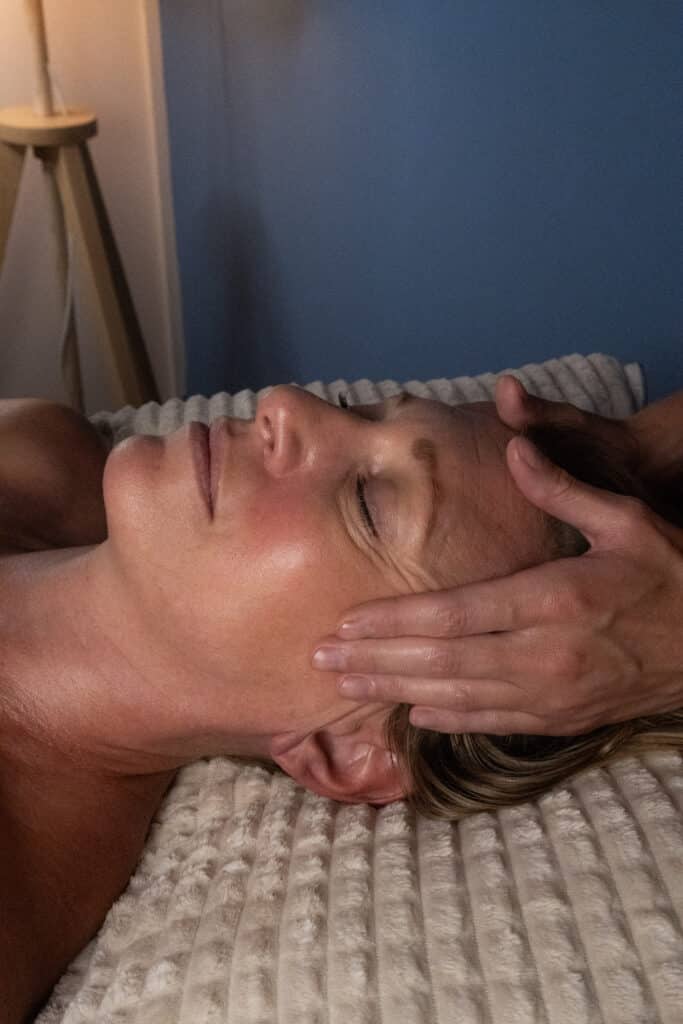
Starting in your 40s, many people notice that their face no longer reacts the same way as before. The skin may feel drier, lose its luminosity, and show more pronounced lines of expression or a less uniform texture. These changes don’t appear overnight and they don’t mean that the skin is “worse.” They are part of a natural evolution influenced by age, accumulated sun exposure, rest, stress, hormonal changes, and daily habits.
The care of mature skin They should not focus on removing every wrinkle or chasing after a still face. Their most realistic goal is to protect the skin barrier, preserve comfort, limit the factors that accelerate visible aging, and support the skin so that it looks rested, flexible, and radiant.
In this article you will find a clear guide to understand what changes after 40, how to build a simple routine, and where manual facial treatments such as Kobido, Gua Sha, facial drainage, or natural facial lifting can take place.
What really changes in the skin after 40?
The skin is made up of several layers that work together to protect the body, regulate temperature, and limit water loss. Over time, some processes slow down. Cell renewal may be slower, sebum production may decrease, and the skin may retain less moisture. That’s why it’s common to notice more tightness or need more comfortable cosmetic textures than years ago.
It also changes the deep support of the face. Collagen and elastin contribute to firmness and the skin's ability to regain its shape. With age, their production gradually decreases and the facial structure evolves. Subcutaneous fat is not distributed exactly the same way, muscle tone can change, and some areas lose volume while others appear heavier.
Accumulated sun exposure plays an important role. Ultraviolet rays favor spots, wrinkles, and loss of elasticity, in addition to increasing the risk of skin cancer. For this reason, sunscreen is not a detail reserved for the summer: it is one of the most useful pillars for preserving health and the appearance of the skin over the years.
MedlinePlus explains that skin aging can be accompanied by dryness, decreased elasticity, changes in pigmentation, and increased fragility. You can find more information on this topic on their official website. aging of the skin.
Mature skin care: starting with the skin barrier
Before adding many more actives, it’s a good idea to observe how the skin feels. Is it tight after cleansing? Is it peeling? Does it burn when applying products? Does it easily become red? These signs can indicate that the skin barrier needs a milder routine.
The barrier is made up of cells and lipids that help keep water inside the skin and protect it from external agents. When it is disrupted, the skin can feel dry, sensitive or reactive. Using too many exfoliants, changing products continuously or combining intensive actives can worsen the situation.
An effective routine doesn’t have to be long. In many cases, three well-chosen steps — gentle cleansing, hydration, and sunscreen — provide more benefits than a shelf full of products used without order.
Cleaning: removing without harming
Cleaning removes sweat, makeup, environmental particles, and excess oil. However, a feeling of “itchy skin” does not mean that it is cleaner. It may indicate that the product has removed too many protective lipids.
In the morning, some mature skin tolerates a very light cleansing or simply lukewarm water well, especially if it is dry and no occlusive product was used during the night. In the evening, it is advisable to properly remove makeup and sunscreen.
A gentle cleanser, without intense perfume and adapted to the sensitivity of the skin, is usually sufficient. Very hot water can increase dryness and redness. After cleansing, it is preferable to dry with gentle touches, without rubbing vigorously.
Double cleansing can be useful when wearing resistant makeup or a sunscreen that is difficult to remove, but it is not mandatory for everyone. The first step can be a milk, balm, or oil cleanser, followed by a gentle water-based cleanser. If the skin feels tight, it is advisable to simplify things.
Hydration: more than just providing water
A moisturizing cream does not permanently fill wrinkles, but it can improve the flexibility, comfort, and superficial appearance of the skin. By reducing water loss, fine lines of dehydration can be less noticeable and the face can regain its radiance.
Humectants, such as glycerin or hyaluronic acid, attract water to the surface layers. Emollients soften the skin, and occlusive ingredients help to limit evaporation. It’s not necessary to memorize all the names: the important thing is to find a texture that feels pleasant and does not cause irritation.
Dry skin tends to appreciate richer creams, especially at night. Combination skin may prefer a light emulsion and apply a more nourishing texture only in areas that need it. The choice depends on the skin’s sensation, not solely on the age indicated on the packaging.
Within the care of mature skin, Hydration must also be adapted to the season. Cold weather, heating, wind, air conditioning and sun exposure can change a person's needs from one week to the next.
Sunscreen: the most important daily action
Sunscreen helps prevent burns, spots, premature aging, and skin cancer. For the face, neck, and neckline, a broad-spectrum sunscreen with a suitable SPF is usually recommended, applied in sufficient amounts.
Using a foundation that contains a little bit of protection is not enough if the amount applied is minimal. The protector must cover exposed areas and be renewed when there is prolonged exposure, sweating, bathing, or rubbing.
Physical measures also count: seeking shade, using a hat, sunglasses, and protective clothing. In Valencia and L’Eliana, where the sunlight can be intense for much of the year, it makes more sense to adopt this habit for the beach.
The best protection is the one you can use regularly. If a product causes discomfort, produces itching, or doesn’t work well with makeup, it’s worth looking for a different texture rather than abandoning the habit. Sunscreen is the foundation of dermatological recommendations aimed at limiting photoaging.
What assets might be of interest after 40?
The active ingredients can improve certain aspects, but they should be introduced with caution. Using several at once makes it difficult to know which one works and which one irritates.
Antioxidants
Vitamin C and other antioxidants are used to help protect the skin from oxidative stress and improve its visual brightness. Some formulas are more potent than others, and not all are equally well tolerated.
Sensitive skin may start with a moderate concentration and reduced frequency. If persistent burning, intense flaking, or redness occurs, it is best to discontinue use and seek professional advice.
Retinoids and retinol
Vitamin A derivatives are used in cosmetics and dermatology to improve texture, fine lines, and certain signs of photoaging. They can cause dryness and irritation, especially at the beginning.
It is recommended to start slowly, for example one or two nights a week, and to accompany them with hydration and sunscreen. They should not be mixed indiscriminately with several potent exfoliants. During pregnancy and breastfeeding, it is necessary to consult a healthcare professional before using retinoids.
Niacinamide
Niacinamide can help strengthen the barrier, improve the appearance of uneven tone, and be suitable for sensitive skin. A very high concentration does not always provide better results and can cause discomfort in some people.
Exfoliating acids
Alpha-hydroxy acids and beta-hydroxy acids can help improve texture and remove superficial cells. However, exfoliating too much can increase sensitivity.
For many care of mature skin, A gentle, spaced exfoliation is enough. The skin does not need to be stripped to prove that a product works.
Menopause, dryness and sensitivity
During perimenopause and menopause, hormonal changes can coincide with changes in skin hydration, elasticity, and sensitivity. Some women notice more dryness, itching, a loss of comfort, or slower recovery after an irritation.
Not all facial changes are solely due to hormones. Sleep, stress, diet, medications, tobacco, sun exposure, and the cosmetic routine also play a role. However, adapting textures and reducing aggressive products can be especially helpful at this stage.
Skin that previously tolerated frequent exfoliation can start to react. In that case, there is no need to insist. Simplifying the routine for a few weeks allows you to observe if it improves comfort.
It is also worth paying attention to the neck and neckline. These areas are usually exposed to the sun, but they are often forgotten during daily hydration and protection.
Swollen faces do not always require intensive treatment
Some mornings, the face may appear more swollen around the eyes, cheeks, or jaw. Lack of sleep, heat, a very salty dinner, alcohol, certain allergies, or sleeping position can all play a role.
Occasional swelling usually subsides during the day. Gentle movement, proper hydration, and a light facial massage can accompany the feeling of decongestion.
It is not advisable to apply very strong pressure around the eyes or use aggressive tools. The skin in this area is thin and sensitive. The goal is not to “empty” the face, but to promote a moment of relaxation and perform gentle movements.
If the swelling appears suddenly, affects only one side, is accompanied by pain, difficulty breathing, an allergic reaction, or visual disturbances, medical attention is necessary.
What can a manual facial treatment offer?
Manual treatments do not stop aging or replace sunscreen or dermatological care. Their main focus is relaxation, tissue mobility, a feeling of lightness, and overall care for the face.
Manual contact can help relax areas that accumulate tension, such as the forehead, the brow, the temples, and the jaw. When a person clenches their teeth or keeps their face contracted for many hours, a gentle massage can promote a greater sense of spaciousness and relaxation.
Manual stimulation also temporarily increases superficial blood flow, which can contribute to a more radiant appearance right after the session. This effect is different from a permanent transformation of the facial structure.
In Marine Lefevre, the Facial treatments in L’Eliana They adapt to the skin condition, the level of sensitivity, and the well-being goal of each person.
Kobido, Gua Sha and natural facial lifting
Kobido is a Japanese facial massage that combines maneuvers of different rhythms and intensities. It can include gliding movements, gentle percussion, kneading, and relaxation work. The session aims to stimulate the face without losing sight of comfort.
Gua Sha uses a smooth tool to apply pressure to previously lubricated skin. The pressure should be controlled and should never cause intense pain or bruising. A stronger tool does not necessarily produce a better result.
Manual facial lifting combines techniques aimed at working on mobility, relaxation, and the perception of firmness. The word “lifting” can create surgical expectations that a massage cannot offer. The result is usually more subtle: rested features, luminous skin, and a feeling of a less tense face.
These methods can be integrated into the care of mature skin when there are no contraindications and when their limitations are explained honestly. They do not remove deep wrinkles, do not replace medical treatments, and do not permanently change the anatomy.
Mandibular tension and its effect on the face
Clenching the teeth, grinding during the night, or keeping the jaw rigid can cause discomfort in the temples, neck, and lower face. It can also make the features appear more tense or tired.
Massage can help relax the superficial muscles of the jaw, but it does not replace a dental evaluation when there is pain, tooth wear, clicking, limitation in opening the mouth, or bruxism.
At home, simple gestures can be practiced:
- Support the tongue gently on the palate, behind the upper teeth.
- Leave a small space between the dental arches.
- Lower your shoulders and breathe slowly.
- Gently massage the temples and the outer area of the jaw.
- Avoid pressing too hard if there is pain.
The jaw does not need to be closed and tight during rest. Becoming aware of this habit several times a day can help reduce tension.
How to build a simple facial routine
A routine doesn't have to completely change at 40 years old. It should respond to the current needs of the skin.
Morning routine
- Mild cleansing or clarification, depending on tolerance.
- Optional antioxidant.
- Moisturizing cream if the skin needs it.
- Broad-spectrum sunscreen.
- Makeup, if used.
Night routine
- Remove makeup and sunscreen.
- Gentle cleaning.
- It is active some nights, if tolerated.
- Moisturizing cream.
- Lip balm or care for dry areas.
The routine can be even simpler. A person with reactive skin can use only cleanser, cream, and sunscreen during a recovery period.
Consistency is more important than changing products every week. Many cosmetics take time to show results, while irritations can quickly appear when too many ingredients are combined.
Skin care for mature skin according to each need
There is no single “skin of over 40 years old”. Two people of the same age may have completely different needs.
If the skin is dry
It is advisable to use a gentle cleanser, reduce exfoliation, and choose a cream with a more nourishing texture. Applying the moisturizer when the skin is still slightly damp can help retain moisture.
If the skin is sensitive
It is preferable to introduce a single new product each time and avoid intense perfumes, frequent exfoliants, or aggressive combinations. The burning sensation is not a normal result that one has to endure.
If you are concerned about the lack of brightness
Sun protection, hydration, rest, and gentle exfoliation can help. Antioxidants can also be used, as long as the skin tolerates them.
If there are stains
Not all spots are the same. Some correspond to sun damage, and others may have different causes. A spot that changes in size, shape, or color, bleeds, or does not heal properly should be evaluated by a dermatologist.
If lines of expression appear
Lines are part of the movement and history of the face. Hydration can soften their superficial appearance. Retinoids and certain dermatological procedures can offer more visible results, but they require an indication and realistic expectations.
Common mistakes that can sensitize the skin
Using too many products
Combining several acids, retinol, vitamin C, and physical exfoliants can cause irritation. More products do not necessarily mean more effectiveness.
Continuously changing routines
If a product is replaced every few days, it is difficult to assess its tolerance. Unless it causes a reaction, it is advisable to give it time to adjust to a simple routine.
Exfoliate until you feel a burning sensation
The burning, intense flaking, and persistent redness are not signs that the skin is being properly renewed. They may indicate an altered barrier.
Forgetting about sunscreen
Using sunscreen at night without protecting the skin during the day limits the results and can increase sensitivity.
Copying social media routines
A viral routine doesn’t know your history, your allergies, or the sensitivity of your skin. Products should be chosen based on real needs.
Expecting a massage to change anatomy
Manual treatments can provide relief and luminosity, but they do not replace surgery or medical procedures. A responsible professional should explain this clearly.
The importance of regularity
The skin responds better to repeated gestures than to intense and sporadic interventions. Applying sunscreen almost every day, moisturizing when there is tightness, and avoiding repeated irritations provides a solid foundation.
Facial treatments can also be performed on a punctual basis or integrated into a program, depending on the objective. A session before an event can bring luminosity and relaxation. Regular follow-up allows for maintaining a moment of care and adapting the techniques to the evolution of the skin.
The ideal frequency is not identical for everyone. It depends on the type of treatment, sensitivity, budget, and routine at home. A fixed number of sessions should not be imposed without first observing the skin response.
A good program of care of mature skin It combines a realistic home routine with adapted professional treatments, without creating dependency or promising impossible results.
When to consult a dermatologist
Wellness treatments are performed on healthy skin. They should not replace the diagnosis or treatment of a skin disease.
Consult a healthcare professional if you notice:
- A spot that changes shape, size, or color.
- An injury that bleeds or does not heal.
- Intense or persistent itching.
- Redness that gets worse.
- Pain, heat, or inflammation.
- Repeated outbreaks without a known cause.
- Sudden swelling.
- Reaction after applying a cosmetic.
- Changes in lunulae.
- Intense dryness that does not improve.
It is also advisable to seek advice before using potent products if you have rosacea, eczema, dermatitis, dermatological treatments, pregnancy or breastfeeding.
Frequently asked questions
Does mature skin always need a very greasy cream?
No. The texture should be adapted to the type of skin and the season. Some mature skin types remain mixed or oily and prefer light emulsions.
Can retinol be used every day?
It is not mandatory and not all skin types tolerate it. It is advisable to start with a low frequency, increase gradually, and discontinue if there is significant irritation.
Does facial massage remove wrinkles?
It does not permanently remove wrinkles. It can relax the features, bring temporary luminosity, and improve the feeling of well-being.
Does Gua Sha need to leave marks?
No. A gentle cosmetic use should not cause hematomas or pain. Intense marks may indicate excessive pressure.
When do the results of a routine show up?
Hydration can improve comfort quickly. Changes in texture or pigmentation usually take longer and require more consistency. Expectations should be adapted to the product and the condition of the skin.
Is it necessary to buy expensive products?
No. The price does not guarantee effectiveness or tolerance. A basic routine with gentle cleansing, hydration, and sun protection may be sufficient.
Taking care of the face without fighting against time
The face changes throughout life. Wrinkles, loss of volume, and changes in texture are all part of that process. Caring for the skin does not require denying one’s age or comparing oneself to photos that have been retouched.
The care of mature skin They can become a form of care rather than permanent correction. Observing the skin, protecting it from the sun, respecting its sensitivity, and enjoying a manual treatment are ways to accompany it without imposing an impossible ideal.
The beauty of a face does not depend on the absence of wrinkles. It is also related to expression, rest, luminosity, and the way a person feels in their own skin.
Conclusion
After 40, the skin may need more hydration, a gentler cleansing, and constant sun protection. Active ingredients can be useful, but they should be introduced gradually and adapted to individual tolerance.
The care of mature skin The more effective ones are not necessarily the most complicated ones. A simple routine, maintained over time, can protect the skin barrier and improve comfort. Manual treatments such as Kobido, Gua Sha, facial drainage, or natural facial lifting can complement this routine by providing relaxation, mobility, and temporary luminosity.
When faced with injuries, changing spots, persistent irritation, or sudden swelling, it is necessary to consult a healthcare professional. The well-being facial care finds its best place when it combines pleasure, prudence, consistency, and realistic expectations.