

Lymphatic system: how it works and why it can slow down
Heavy legs, a feeling of swelling, ankles more pronounced at the end of the day, or a general impression of retention? When these sensations appear, it is common to hear that “the lymphatic system is sluggish”. But what does that really mean?
The lymphatic system It is a complex network of vessels, ganglia, tissues, and organs that participates in both the balance of the body's fluids and the immune response. It transports a liquid called lymph from the tissues into the bloodstream.
Unlike blood circulation, the lymphatic system does not have a heart that continuously pumps lymph. Its movement depends on several mechanisms: the contractions of the individual lymphatic vessels themselves, their valves, muscle movements, and breathing, among other factors.
Understanding how it works allows us to avoid many false ideas about fluid retention and better understand why some people feel more heavy-headed or bloated at certain times.
What exactly is the lymphatic system?
The lymphatic system It travels virtually throughout the entire organism.
It is mainly composed of:
- lymphatic vessels;
- lymphatic ganglia;
- lymph;
- stomach;
- thymus;
- tonsils;
- Other tissues related to the immune system.
The lymphatic vessels form a network that collects part of the fluid present between the cells and progressively transports it to larger vessels.
Finally, the lymph returns to the bloodstream.
The lymph nodes, which are especially concentrated in areas such as the neck, armpits, and groin, participate in the filtering of lymph and are part of the body's defenses.
That is why the lymphatic system should not be understood solely as a “drainage system”.
It performs essential functions for health.
What is lymph?
Lymph is a liquid that circulates through the lymphatic vessels.
It contains, among other components, white blood cells related to the body's defense.
During normal circulation, part of the fluid leaves the small blood vessels into the tissues. Part returns directly to the bloodstream, and another part is collected by the lymphatic system.
Afterwards, that liquid is progressively transported back to the bloodstream.
It is a process that happens continuously without us realizing it.
The three major functions of the lymphatic system
The lymphatic system It participates in different functions, but we can summarize them into three large groups.
Maintaining the balance of fluids
One of its fundamental functions is to collect the excess fluid present between the cells and return it to the circulation later.
When this mechanism is seriously impaired, a buildup of fluid in the tissues can occur.
Participate in immune defenses
The lymph nodes contain cells of the immune system.
When an infection is present, it is possible to notice some enlarged lymph nodes, for example in the neck.
The lymphatic system thus participates in the identification and response to different potentially harmful agents.
Transporting certain fats
The lymphatic system also participates in the absorption and transport of fats from the digestive tract.
Therefore, its functions are much broader than simply removing fluids.
How does the lymph circulate if there is no lymphatic heart?
This is one of the most interesting questions.
The blood has the heart as its central pump.
The lymph not.
However, this does not mean that it remains immobile.
Lymphatic vessels have their own mechanisms that allow the fluid to move forward and have valves that help prevent it from flowing backward.
In addition, different movements of the body contribute to the movement of the lymph.
Among them are:
- muscle contraction;
- movements related to breathing;
- certain pulsations of nearby structures;
- the contractions of the lymphatic vessels themselves.
Physiological research has shown that muscle contractions and breathing are part of the external forces that contribute to lymphatic transport.
That is why the body movement has a close relationship with the circulation of the lymph.
What does it mean that the lymphatic system is “slowed down”?
In everyday language we use expressions like:
“My lymph fluid is not circulating.”.
“I’m withholding everything.”.
“I need to activate the lymphatic system.”.
But it is worth making a clarification.
There is not necessarily a disease called “slow lymphatic system”.
In a healthy person, the lymphatic circulation works continuously.
What can happen is that certain circumstances can reduce certain mechanisms that favor the movement of lymph, or that there is a real alteration of the vessels or lymph nodes.
That's why we must differentiate between a feeling of heaviness or occasional swelling and a true lymphatic disorder.
The muscular movement helps the transport of the lymph
Muscles are not only used for walking, running, or lifting objects.
When they contract and relax, they also generate pressure changes on the surrounding tissues and vessels.
These movements contribute to the transport of lymph.
For this reason, spending many hours completely immobile eliminates some of this mechanical stimulation.
This does not mean that sitting for a few hours causes lymphatic disease.
It simply means that the movement is part of the natural mechanisms that help transport fluids in the body.
Walking, regularly changing position, and maintaining an adapted physical activity are interesting habits for overall health.
Breathing also participates in the lymphatic movement
Breathing generates movements and pressure differences within the thorax and abdomen.
These changes also participate in the circulation of lymph.
Research on lymphatic physiology has identified breathing as one of the forces that contribute to lymphatic flow.
That is why we can understand the lymphatic system as a dynamic network that constantly responds to the movements of the body.
However, this does not mean that performing deep breathing for five minutes will “detoxify” the body.
The functioning of the lymphatic system is much more complex.
Does sedentary lifestyle block the lymphatic system?
Talking about “blockage” would be excessive for a healthy person.
But remaining immobile for prolonged periods reduces the involvement of the muscle pump.
For example, after several hours of sitting during a trip or a workday, some people feel their legs heavier or their ankles a little swollen.
This may be related to different circulatory mechanisms and not only the lymphatic system.
Therefore, it is important not to automatically attribute any swelling to “lymph.”.
Why can we feel our legs heavy?
The feeling of heavy legs can have multiple causes.
It can appear after standing or sitting for many hours, with high temperatures, or after certain particularly sedentary days.
But there may also be a venous or lymphatic circulatory problem, or another medical cause.
That's why it's different to say:
“Today I feel my legs heavy after standing for eight hours”
having persistent swelling of one leg for several weeks.
The second situation deserves professional evaluation.
Fluid retention and lymphedema are not the same thing
This difference is especially important.
In everyday language, we call “fluid retention” many different sensations:
- marked ankles;
- tired legs;
- swelling;
- feeling of heaviness;
- changes in volume during the day.
However, one Lymphoedema It is a specific medical situation.
It appears when lymph accumulates in the tissues because the lymphatic system is damaged, altered, or blocked. It usually affects especially the arms or legs.
We should not use both terms as synonyms.
What can really disrupt lymphatic drainage?
There are medical conditions that can indeed alter the functioning of the lymphatic system.
Among the described causes are:
- certain surgeries;
- removal of lymph nodes;
- radiotherapy;
- certain infections;
- traumas;
- some diseases;
- congenital abnormalities of the lymphatic vessels.
For example, after certain cancer treatments that involve the removal of lymph nodes, some people may develop lymphoedema.
In these situations we are not simply talking about an aesthetic sensation of swelling.
There is a medical condition that requires professional follow-up.
How does lymphedema manifest itself?
The most characteristic symptom is a persistent swelling, Usually in one arm or one leg.
Depending on the situation, a sensation of heaviness, tightness, or changes in the tissues may also appear.
The diagnosis is made by a healthcare professional.
It is not possible to determine whether there is a lymphatic problem by looking at just a few swollen legs.
Therefore, when swelling is persistent, progressive, or clearly different between one side and the other, it is advisable to consult a doctor.
Occasional swelling: it does not always mean a lymphatic problem
This point deserves emphasis.
Not all swelling means that the lymphatic system is malfunctioning.
There may be other mechanisms involved.
Heat, staying in the same position for many hours, certain hormonal changes, venous problems, or certain diseases can produce similar sensations.
Even a feeling of swollen abdomen can have a completely digestive origin and not lymphatic.
That is why it is better to avoid phrases like:
“If you’re swollen, you need drainage.”.
The body is more complex.
Does drinking a lot of water “cleanse” the lymphatic system?
This is another very common idea.
Maintaining adequate hydration is important for the overall functioning of the body.
But drinking enormous amounts of water does not “wash out” the lymph or remove toxins in any special way.
The liver, kidneys, digestive system, lungs, and other systems are continuously involved in the body's elimination and balance processes.
We do not need to force these mechanisms with large amounts of water.
The best recommendation is to maintain hydration adapted to personal needs.
What role does physical activity play?
The muscular movement contributes to lymphatic transport and to circulation in general.
There is no need to perform an intense workout.
Simple activities like walking allow you to repeatedly activate the muscles of the legs.
It can also be useful to avoid staying exactly the same position for several hours.
For example, during a sedentary workday:
Getting up regularly, walking for a few minutes, and moving your legs can be a simple way to introduce movement.
This is part of general health habits and should not be considered as treatment for a diagnosed lymphedema.
The lymphatic system and the feeling of swollen legs
At the end of the day, some people notice deeper marks on their socks, a feeling of tension or heaviness.
When this feeling is occasional and disappears, it may be related to the activities performed during the day.
But if the swelling:
- appears repeatedly;
- it does not disappear;
- increases progressively;
- it mainly affects one side;
- produces pain;
- appears after surgery;
It is advisable to consult a healthcare professional.
What is manual lymphatic drainage?
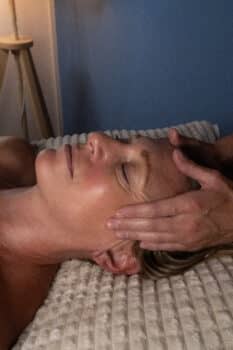
The manual lymphatic drainage It is a technique based on gentle and specific movements performed on the skin.
In the medical field, manual lymphatic drainage can be part of the treatment for certain lymphedemas, usually as part of a broader approach that may include compression, exercise, and specific care.
This specialized treatment should not be confused with any relaxing massage.
The intensity should also not be too strong.
Manual lymphatic drainage is characterized precisely by gentle and controlled movements.
Does a strong massage drain better?
No.
“Stronger” does not mean “more effective” when we talk about lymphatic drainage.
The superficial lymphatic vessels are located near the skin.
Drainage uses specific, gentle, and rhythmic movements.
Therefore, a drainage session should not be confused with a deep muscular massage.
Both of them can have completely different goals.
Body lymphatic drainage in L’Eliana
En Marine Lefevre, in L’Eliana near Valencia, Body drainage is achieved through gentle, rhythmic manual movements.
It is intended as a wellness care for people who seek a feeling of body lightness, especially when they experience occasional heaviness or swelling.
You can get to know the lymphatic drainage and wellness treatments in L’Eliana. Marine’s offering currently includes full-body drainage, leg drainage, and other manual sessions tailored to each person’s individual sensations.
Before each session, it is important to explain any medical conditions, treatments, recent surgery, or known circulatory problems.
Leg drainage when there is a feeling of heaviness
The legs are one of the areas where we most frequently feel changes throughout the day.
Standing for long periods, a sedentary day, or heat can increase the feeling of fatigue.
In these situations, some people seek gentle manual treatment simply to regain a sense of lightness and to give the body a moment of rest.
Marine also offers specific leg drainage sessions in L’Eliana.
The session should always be adapted to each individual.
And after an operation?
A surgical intervention completely changes the context.
After surgery, there may be inflammation, healing processes, medications, and specific recommendations from the medical team.
That is why a post-operative drainage should never be initiated just because a person feels swollen.
In certain situations, professional authorization is necessary and the recovery phase must be respected.
Marine expressly indicates that his postoperative sessions are adapted to the recovery phase and are carried out when the situation allows it.
Does lymphatic drainage help you lose weight?
We must not confuse a temporary change in the feeling of swelling with a loss of fat.
Lymphatic drainage does not remove adipose tissue.
A person may feel lighter after a session without having lost body fat.
This difference is especially important when we talk about body remodeling.
Body well-being should not be based on unrealistic promises.
Does drainage remove toxins?
The word “toxins” appears constantly in the communication about wellness treatments.
But it is too inaccurate.
The lymphatic system is involved in the transport of fluids, substances, and cells, but we should not present massage as a technique capable of magically “cleaning” the body.
The body has numerous organs and systems that are constantly responsible for maintaining its balance.
That's why at Marine Lefevre we prefer to talk about:
- feeling of lightness;
- physical well-being;
- manual labor;
- relaxation;
- accompaniment of the feeling of heaviness.
They are much clearer and more realistic goals.
What can we do on a day-to-day basis to support circulation?
There is no miraculous routine for “activating the lymph”.
However, several general habits can help prevent spending the whole day completely immobile.
Walking regularly
The movement of the legs is involved in the mechanisms that accompany the transport of fluids.
Change of position
If you work sitting down, try to introduce small breaks.
If you spend a lot of time standing, also look for moments of rest and different movement.
Breathe freely
Breathing is part of the physical mechanisms involved in lymphatic movement.
Maintain physical activity
An activity adapted to your abilities benefits numerous body systems.
Avoid obsessing over “detoxification”
You don't need to undergo extreme cures, stop eating, or drink special preparations to get your lymphatic system to work.
Lymphatic system and well-being after 40
As the years go by, many women begin to pay more attention to sensations that previously went unnoticed.
Lighter legs at the end of the day, body changes, hormonal fluctuations, or increased sensitivity to heat can cause the feeling of “being held back.”.
But it is important to avoid automatically attributing all these changes to menopause or the lymphatic system.
The feeling of swelling can have different origins.
Observing when it appears, how long it lasts, and whether it affects both sides of the body can provide useful information.
How to distinguish an occasional feeling from something that deserves consultation
An occasional feeling of heaviness after a particularly long day is not the same as persistent swelling.
Consult a healthcare professional if you notice:
- a swelling that does not go away;
- gradual increase in volume;
- Marked swelling of one arm or leg;
- significant pain;
- changes in the skin;
- heat or redness;
- appearance after surgery or medical treatment.
MedlinePlus recommends professional evaluation in the case of persistent swelling of the arms, legs, or lymph nodes that does not subside.
A sudden swelling of one leg, especially accompanied by pain, warmth, or redness, requires prompt medical evaluation. If there is also difficulty breathing or chest pain, urgent care should be sought.
Listening to the body without diagnosing everything
The Internet has popularized terms like:
“blocked lymph”;
“inflamed body”;
“retention”;
“accumulated toxins”.
The problem is that these expressions can lead us to interpret any bodily sensation as a disease.
Sometimes we simply feel the consequences of a long day.
Other times there is a true medical cause.
The goal should not be diagnosing us by watching videos on social media.
It should be learning to observe the body and knowing when a sensation enters something casual and when it deserves professional evaluation.
Lymphatic drainage and well-being in L’Eliana, Valencia
In Marine Lefevre, each session begins by listening to what you are feeling.
Not all people come looking for the same thing.
Some describe:
- heavy legs;
- feeling of swelling;
- physical fatigue;
- the need to relax;
- Desire to feel lighter.
Manual labor adapts to those sensations within a wellness approach.
Marine offers complete body lymphatic drainage, leg drainage and facial drainage in its space in L’Eliana, near Valencia.
If there is a medical condition, a recent surgery, or a diagnosed lymphedema, it is important to mention this before booking the appointment to assess whether the session is suitable and whether professional authorization is required.
Frequently asked questions about the lymphatic system
How do I know if my lymphatic system is not working properly?
It cannot be determined solely by feeling swelling. A lymphatic problem can cause persistent swelling, but many other causes can also do so. If the problem persists, it should be evaluated by a healthcare professional.
Can the lymphatic system become sluggish?
The term “slow lymph” is widely used in wellness circles, but medically it is more accurate to speak of alterations in the transport or drainage of lymph. Muscle movement, breathing, and the actual contractions of the vessels all contribute to the flow of lymph.
Does walking help the lymphatic system?
The contraction of the muscles is part of the mechanisms that contribute to the movement of the lymph. Walking is also a beneficial activity for overall health.
Does drinking more water activate the lymph?
Adequate hydration is important, but drinking excessive amounts does not “clean” or unblock the lymphatic system.
Is fluid retention always lymphatic?
No. Swelling can have multiple causes, and not all retention is due to lymphedema.
Does lymphatic drainage have to hurt?
Manual lymphatic drainage is characterized by gentle maneuvers. It does not need to be painful or extremely intense to be performed correctly.
Does lymphatic drainage help to lose fat?
No. It can change the feeling of heaviness or swelling in some people, but it does not remove fat tissue.
When should I not have a drainage procedure done?
In the case of acute illnesses, swelling of unknown origin, suspected thrombosis, certain cardiac or renal conditions, infections, recent surgery, or other medical situations, it is necessary to consult a healthcare professional beforehand.
Understanding the lymphatic system to better care for your body
The lymphatic system It works continuously even though we are not aware of it.
It collects fluids from the tissues, participates in our defenses, and transports the lymph back to the bloodstream.
Its functioning depends on a complex combination of vessels, valves, internal contractions, muscle movement, and breathing.
That’s why it’s too simplistic to say that any feeling of swelling means that “the lymph is blocked.”.
Sometimes the body needs movement.
Sometimes he needs rest.
Sometimes we simply seek a sense of lightness and well-being.
And other times a swelling needs to be medically evaluated.
If you are looking for a moment of body care, you can discover the wellness treatments and lymphatic drainage in L’Eliana o book your treatment at L’Eliana.
En Marine Lefevre, L’Eliana near Valencia, Each treatment is tailored to your sensations, comfort, and needs, with a personalized and respectful approach to the body.