
The feeling of having a swollen, harder or more voluminous belly is a common concern starting at age 40. Many women notice that their clothes feel tighter at the end of the day, that digestion seems slower, or that the abdomen changes even when their eating habits haven't changed much. These changes can be disconcerting, but they don't necessarily mean that it's all fat or that the body has stopped responding.
The menopause and abdominal inflammation They can be related through various factors: hormonal variations, intestinal transit, stress, sleep, breathing, the distribution of body fat, and possible fluid retention. Each woman experiences this transition in a different way. Therefore, before seeking a quick solution, it is advisable to observe the entire body and understand what may be behind the feeling of bloating.
This article offers a clear and prudent explanation to help you distinguish between digestive distension, fluid retention, abdominal tension, and changes in body composition. You will also find simple habits that can promote greater everyday comfort, without extreme diets or unrealistic promises.
What is the relationship between menopause and abdominal inflammation?
Menopause is a natural stage of life. It is confirmed when twelve consecutive months have passed without menstruation and there is no other cause that explains the absence of periods. Before that moment, perimenopause occurs, a transition that can last several years and during which cycles, rest, mood, and different bodily sensations may change.
During this stage, hormones such as estrogen and progesterone fluctuate. These variations do not explain all digestive symptoms by themselves, but they can indirectly influence intestinal transit, pain perception, appetite, sleep, and fat distribution.
In addition, the experience of menopause is not the same for all women. Some hardly notice any changes, while others experience periods of increased fatigue, hot flashes, irritability, sleep disturbances, or digestive discomforts.
The World Health Organization reminds us that menopause is not a disease, but a stage of the life cycle, although certain symptoms can affect physical, emotional, and social well-being. You can find general information about it on the Official WHO fact sheet on menopause.
Talking about menopause and abdominal inflammation Therefore, it is necessary to avoid explanations that are too simple. The abdomen may appear more voluminous due to air, constipation, slow digestion, posture, muscle tension, fluid retention, or accumulation of visceral fat. In many cases, several factors are involved at the same time.
Swelling, distention and fat: they are not the same thing
The word “swelling” is used to describe different sensations. Identifying which one resembles what you’re feeling can help you choose more suitable habits and better explain your symptoms to a healthcare professional.
The feeling of swelling
It is a subjective perception of pressure, fullness, or heaviness in the abdomen. It can appear even though the abdomen does not visibly increase in size.
Some women describe a feeling of a tight waistband, discomfort after eating, or the need to loosen clothing. This feeling can be more intense at the end of the day, during periods of stress, or after large meals.
Abdominal distension
Abdominal distention is a visible increase in the abdominal circumference. It can vary throughout the day and be more noticeable in the afternoon or after certain meals.
The intestinal gas, constipation, digestive sensitivity, and the way the diaphragm and the abdominal wall coordinate can all contribute to this variation.
A swelling that appears and disappears within a matter of hours does not necessarily correspond to an increase in body fat.
Water retention
The retention is also often noticeable in other areas: legs, ankles, hands or face. It can give a general feeling of heaviness and fluctuate depending on the heat, movement, salt intake, certain medications or different hormonal situations.
Not all abdominal swelling is due to fluid. For this reason, lymphatic drainage is not automatically the appropriate response for any swollen belly.
Changes in body fat
With age, the body composition can change. It is possible to lose muscle mass if physical activity decreases and to gradually increase body fat.
During the menopausal transition, its distribution can also change, with a greater tendency to concentrate in the central area. This process is different from a swelling that appears and disappears within a matter of hours.
Observing the evolution is useful. If the abdomen is relatively flat when waking up and increases after eating, there may be an important digestive component.
If the volume changes little from one day to the next and is accompanied by a progressive increase in the circumference of the waist, the body composition may be more influential. This is not about making an auto-diagnosis; it is about gathering clues to better understand what is happening.
Why can digestion change after 40?
Digestion depends on many factors. It not only matters what we eat, but also how we eat, how much we move, how we sleep, and what state the nervous system is in.
During perimenopause, some women experience constipation, gas, heavier digestion, or a reduced tolerance to certain foods.
However, it is not advisable to automatically attribute any symptoms to hormones. A recent change in diet, reduced physical activity, pharmacological treatment, an intolerance, a gastrointestinal problem, or a period of stress can also explain the changes.
The relationship between menopause and abdominal inflammation It can become more visible when several elements coincide:
- Less hours of sleep.
- More fatigue during the day.
- Faster meals.
- Lower physical activity.
- Professional or family stress.
- Changes in schedules.
- Constipation.
- Lower water consumption.
- Increase in emotional tension.
The body does not function in compartments. Rest affects appetite, stress changes breathing and habits, movement promotes transit, and digestion conditions the sense of energy.
That is why addressing food alone is not always enough.
The role of stress and the nervous system
When we live in a hurry or with worry, the body can remain in a state of heightened alertness. Breathing becomes more superficial, the diaphragm loses mobility, and the muscles of the jaw, neck, back, and abdomen can remain contracted.
We are not always aware of this tension. Some people notice that they are clenching their jaw or raising their shoulders, but they do not realize that they also keep their abdominals rigid for much of the day.
The digestive system is closely connected to the nervous system. A stage of stress does not produce exactly the same response in all people.
Some lose their appetite, others eat more quickly, and others experience gas, intestinal urgency, slow digestion, or constipation.
It is also common to swallow more air when eating quickly, talking a lot during meals, chewing little or drinking beverages with gas.
In this context, trying to “squeeze in” all day can increase discomfort. Constantly keeping the abdomen contracted limits a wide breath and can reinforce the feeling of stiffness.
Learning to relax the abdominal wall for a few minutes, breathing calmly, and regaining trunk mobility can be more useful than constantly fighting against the belly.
Sleep, fatigue, and changes in appetite
Hot flashes, night waking, and anxiety can disrupt sleep quality during perimenopause.
When you sleep poorly, it becomes more difficult to maintain regular routines, cook calmly, or feel energetic to move around. They can also increase cravings and snacking, especially for very sugary or highly processed foods.
This does not mean that a difficult night will transform the body. The problem usually appears when the fatigue persists for weeks or months and gradually displaces the habits that previously protected well-being.
The answer does not consist in blaming ourselves or imposing more restrictions, but in recovering a realistic basis:
- Relatively stable meal schedules.
- Meals that are easy to digest.
- Lower consumption of stimulants when they affect sleep.
- Exposure to natural light during the day.
- Movement adapted to the level of energy.
- Moments of rest without screens.
- A simple and repetitive nighttime routine.
Understanding the menopause and abdominal inflammation From this perspective, it allows us to get rid of the idea that everything depends on willpower.
The hormonal context can coincide with family responsibilities, work pressure, lack of time, and emotional changes. Taking care of yourself requires adapting strategies to real life, not pursuing a perfect routine that is impossible to maintain.
Nutrition: avoid unnecessary prohibitions
There is no universal list of foods that make all women feel bloated. A healthy food can be fine for one person and cause discomfort for another, especially if consumed in large quantities or if introduced abruptly.
Before removing whole groups of foods, it may be helpful to observe:
- At what time does the swelling appear?.
- If it is related to a specific meal.
- If it gets worse when you eat fast.
- If it appears after a particularly heavy meal.
- How many days pass between the depositions.
- If there is pain, burning, nausea, or diarrhea.
- If the symptom changes during periods of stress.
- If any medication or supplement coincides with the onset of the problem.
- If the discomfort improves during the holidays or days off.
- If there are foods that are better tolerated cooked than raw.
Fiber is important for transit and digestive health, but increasing it too quickly can increase gas. The ideal is to do it gradually and to accompany it with adequate hydration.
Legumes, vegetables, fruits, and whole grains can be part of a balanced diet, adjusting amounts and preparations according to individual tolerance.
For example, some people tolerate cooked vegetables better than raw ones, mashed legumes better than whole ones, and small portions better than large ones spread out throughout the week.
Eating slowly, chewing well, and sitting down for meals seem basic, but they can make a real difference.
It also helps prevent reaching for extreme hunger, because it favors quick and abundant intakes.
When persistent symptoms are present, a doctor or dietitian-nutritionist can assess the situation without resorting to improvised exclusions.
Hydration also needs balance.
Drinking water is important, but it is not necessary to force oneself to consume excessive amounts. Needs vary based on temperature, physical activity, diet, health status, and medical recommendations.
Drinking small amounts spread throughout the day is often more comfortable than trying to regain all the hydration at night.
Carbonated drinks can temporarily increase the feeling of distension in some people. Alcohol can also affect sleep and promote less conscious food choices, although its effect varies from person to person.
Infusions can be part of a pleasant routine, but they should not be presented as a detox solution or a hormonal treatment.
Natural does not automatically mean suitable for everyone. Some plants may be contraindicated in certain situations or interact with medications.
Movement and muscle mass
Regular physical activity promotes overall well-being, the maintenance of muscle mass, mobility, and intestinal transit.
It is not necessary to perform very intense workouts to start seeing benefits. Walking, climbing stairs, practicing adapted strength exercises, swimming, dancing, or performing mobility are valid options.
Muscle mass deserves special attention after 40. Maintaining it helps preserve strength, independence, and an active metabolism.
Strength exercises can be adapted to each level and performed with body weight, elastic bands, machines, or progressive loads, always respecting the health situation and any possible limitations.
To address the menopause and abdominal inflammation, The movement should be understood as a tool for regulation and not as a punishment for eating.
A gentle walk after a meal can promote digestive comfort. Trunk mobility exercises and breathing can reduce stiffness. Strength work helps to sustain lasting changes in body composition.
The important thing is to find an activity that can be sustained. Training at an intense level for a few days and then giving up due to exhaustion is usually less useful than moving at a moderate and steady pace.
Breathing and diaphragm mobility
The diaphragm is the main muscle of breathing. When we inhale, it descends and allows the lungs to expand. When we exhale, it rises.
This movement creates pressure variations within the trunk and naturally accompanies the abdominal organs.
In periods of tension, many people breathe primarily with the upper part of the chest. The shoulders rise, the abdomen hardly moves, and the breath may be short.
Dedicating two or three minutes to a quiet breath can help you reconnect with your body.
You can try this practice:
- Sit with your back supported or lie down in a comfortable position.
- Place one hand on the lower ribs and the other on the abdomen.
- Inhale through the nose without forcing, letting the ribs open.
- Exhale slowly, without pushing your belly inward.
- It allows the abdomen to relax between breaths.
- Avoid seeking an excessively deep inspiration.
- Repeat for two or three minutes.
This practice does not replace medical treatment or eliminate persistent swelling on its own.
Their interest is to offer a moment of calm, improve body awareness, and reduce the tendency to keep the abdomen contracted.
The posture can modify the appearance of the abdomen
The posture does not explain all the changes in the abdomen, but it can influence the perception of volume and tension.
Sitting for many hours can reduce the mobility of the hips, thorax, and diaphragm. At the end of the day, the body may feel cramped and rigid.
There is no perfect posture that should be maintained permanently. The body needs to vary its position.
Changing your support, getting up regularly, walking for a few minutes, and making gentle movements are often more interesting than trying to stay completely straight for eight hours.
It is also advisable to avoid correcting the posture by continuously contracting the abdomen. A comfortable posture should allow for breathing.
Can a wellness massage help?
Massage does not treat the medical causes of swelling and should not be presented as a cure for digestive, hormonal or inflammatory problems.
However, within a wellness approach, manual contact can promote relaxation, body perception, and a sense of rest.
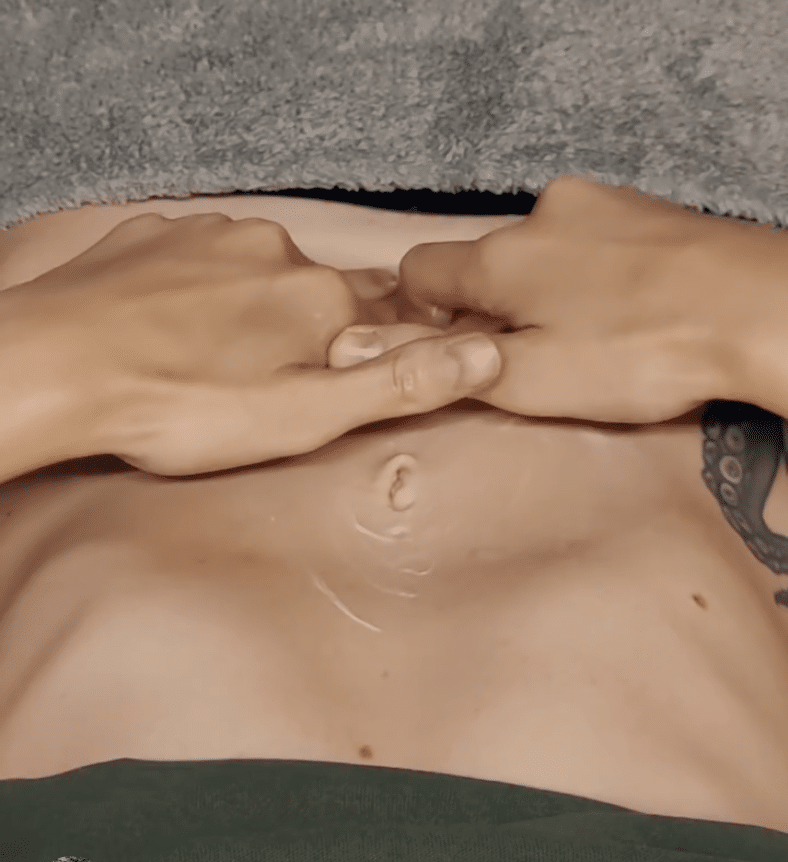
When the abdomen is tense from stress, gentle, adapted, and non-painful manual work can help release the breath and reduce the feeling of stiffness.
The body massage can also focus on the back, the diaphragm, the legs or the shoulders, according to the needs of each person.
The choice of technique should be made after discussing the general condition, history, and possible contraindications.
In Marine Lefevre, each accompaniment adapts to how you feel that day. You can discover the wellbeing massages in L’Eliana and choose an experience geared towards relaxation, recovery, or a sense of lightness.
The goal is not to transform the body artificially, but to create a space to slow down and feel it again more comfortably.
Lymphatic drainage and swollen abdomen
Manual lymphatic drainage uses gentle, slow, and rhythmic movements. It can be part of a wellness care when there is a feeling of heaviness or retention, provided there are no contraindications.
It is not a strong massage and does not seek to break down or eliminate fat.
It is important to differentiate between fluid retention and digestive distension.
If the main cause is gas, constipation, or an intestinal disorder, the lymphatic drainage does not act on the source of the problem.
If there is persistent, asymmetrical, painful, or sudden swelling, it is necessary to seek medical advice before receiving a massage.
Within the topic of menopause and abdominal inflammation, Draining can be of interest to some women because of the overall feeling of lightness and relaxation it provides.
Its effects must be explained honestly: it does not replace physical activity, does not eliminate fat, and does not on its own correct a hormonal or digestive problem.
A simple routine to regain comfort
It is not necessary to change everything in a week. An effective routine is one that can be maintained, even during periods of intense work or fatigue.
In the morning
Start the day with a glass of water if you find it pleasant. Perform some slow breaths and gently move your torso.
If you spend many hours sitting, avoid waiting until the end of the day to get moving. A few minutes in the morning already create a first sign of activity.
You can make smooth shoulder movements, side tilts, and trunk rotations without forcing them.
During meals
Sit down, reduce distractions, and chew without haste. There’s no need to count every bite.
The goal is to better notice the taste, satiety, and digestive response.
If certain foods cause discomfort, record the context before eliminating them: quantity, time, level of stress, and other foods consumed.
Throughout the day
Get up regularly, take a few minutes to walk, and change your position.
Drinking reasonable amounts of water throughout the day is usually more comfortable than drinking a large amount at once. Adjust your hydration to the weather, activity, and recommendations of your healthcare professional.
A short walk after eating can be more accessible than a long sports session.
In the afternoon or evening
A quiet walk, a dinner adapted to your tolerance, and a moment without screens can facilitate the transition to rest.
If breathing is blocked, practice two minutes of slow exhalations.
Regularity is often more useful than a perfect routine performed only occasionally.
Common mistakes when the abdomen changes
Starting an overly restrictive diet
Eliminating bread, fruit, dairy products, legumes and other foods at the same time makes it difficult to know what is actually causing the discomfort.
It can also create fear of eating, deficiencies, or episodes of compensation. Medically justified exclusions should be guided by a professional.
Thinking that everything is fat
An abdomen that changes a lot between the morning and the evening cannot be explained solely by an increase in fat.
Intestinal contents, gases, posture and tension can all change their appearance.
Looking for an extremely strong massage
Pain does not guarantee effectiveness. In the abdomen, the maneuvers must be especially gentle.
Intense massage can be unpleasant and is not appropriate for everyone.
Buying “detox” products”
The body already has organs responsible for processing and eliminating substances.
Infusions, supplements, or detox programs do not replace a medical evaluation when there is a persistent symptom. Some products may also interact with medications.
Comparing oneself with unrealistic images
The shape of the abdomen depends on anatomy, posture, breathing, age, motherhood, body composition, and the time of day.
A relaxed abdomen does not have to be completely flat.
Weighing ourselves every day
The weight can fluctuate due to hydration, digestive content, and other factors. Constantly monitoring it can increase anxiety without providing really useful information about well-being.
It is preferable to also evaluate energy, strength, digestive comfort, and quality of sleep.
When is it advisable to consult a doctor?
Most occasional episodes of swelling are benign, but a new, intense, or persistent symptom warrants attention.
Consult a healthcare professional if the distension lasts several weeks, increases progressively, or significantly affects your diet and daily life.
It is also advisable to request a valuation if it appears along with:
- Intense or worsening pain.
- Repeated vomiting.
- Fever.
- Blood in the stool.
- Vaginal bleeding after menopause.
- Unwanted weight loss.
- Difficulty eating.
- Marked and persistent change in traffic patterns.
- Abdominal bulge.
- Lack of air.
- Sudden edema.
- Very localized or asymmetrical swelling.
In the event of a sudden or worrying symptom, do not wait for a massage session.
Not everything should be attributed to the menopause and abdominal inflammation. The hormonal transition may coincide with other health situations that require specific evaluation.
Consulting does not mean being alarmed; it means taking care of the body with appropriate information.
Listening to the body without going to war with it
The changes that occur during perimenopause can affect body image.
It is common to feel that the body becomes unpredictable or that the strategies from before no longer work the same way. This perception can generate frustration and lead to overeating, weight gain, or an enlarged abdomen.
A more gentle approach consists of moving from surveillance to observation.
Instead of asking yourself every day if your belly looks flat, you can assess:
- How you sleep.
- How you digest.
- If you move around comfortably.
- If you have the energy.
- If you notice pain or just a feeling of heaviness.
- If your clothes are comfortable.
- If your habits help you feel better.
- If you need to rest.
- If there are any symptoms that require consultation.
These bodily changes should not become an aesthetic battle.
The main goal is to regain comfort, understand the signals of the body and detect when professional support is needed.
Nutrition, movement, rest, breathing, and manual care can be complemented, without any of them having to present themselves as a miracle solution.
The importance of consistency
A massage session, a walk, or a balanced meal can provide a pleasant feeling, but lasting changes usually depend on regularity.
Perseverance doesn’t mean doing everything perfectly. It means repeating small actions frequently enough to make them part of everyday life.
It may be more useful to walk twenty minutes four times a week than to do a grueling session once a month.
It may also be more realistic to devote three minutes daily to breathing and moving your body than to wait for an entire hour of peace and quiet.
During perimenopause, needs can change from one week to the next. There will be days with more energy and others where it will be necessary to slow down the pace.
Adapting does not mean abandoning. Listening to the body allows us to maintain a flexible continuity.
Conclusion
The abdomen can change after 40 for multiple reasons. Hormonal fluctuations are part of the context, but they also influence digestion, stress, sleep, activity level, muscle mass, posture, and fluid retention.
Distinguishing between swelling, distention, and fat allows for more coherent measurements and avoids unnecessary restrictions.
To take care of the menopause and abdominal inflammation, Start with simple actions: eat more slowly, monitor your digestive tolerance, maintain a regular movement pattern, work on strength in an adapted way, and take a few minutes to breathe without contracting your abdomen.
A wellness massage can accompany this process by offering relaxation and a better connection between the body, but it should never replace a medical evaluation.
Your body does not need punishments or extreme solutions. It needs attention, consistency, and care adapted to the stage you are going through.